“Weird” sellers on second-hand platforms are a new traffic generation | insight, news, blog
Summary: Is this for fun, or is it internet performance art? At a small e-commerce industry seminar, a speaker pointed to the picture in the PPT presentation and asked with a smile. picture Topics: insight, news, blog.
"Is this for fun, or is it online performance art?"
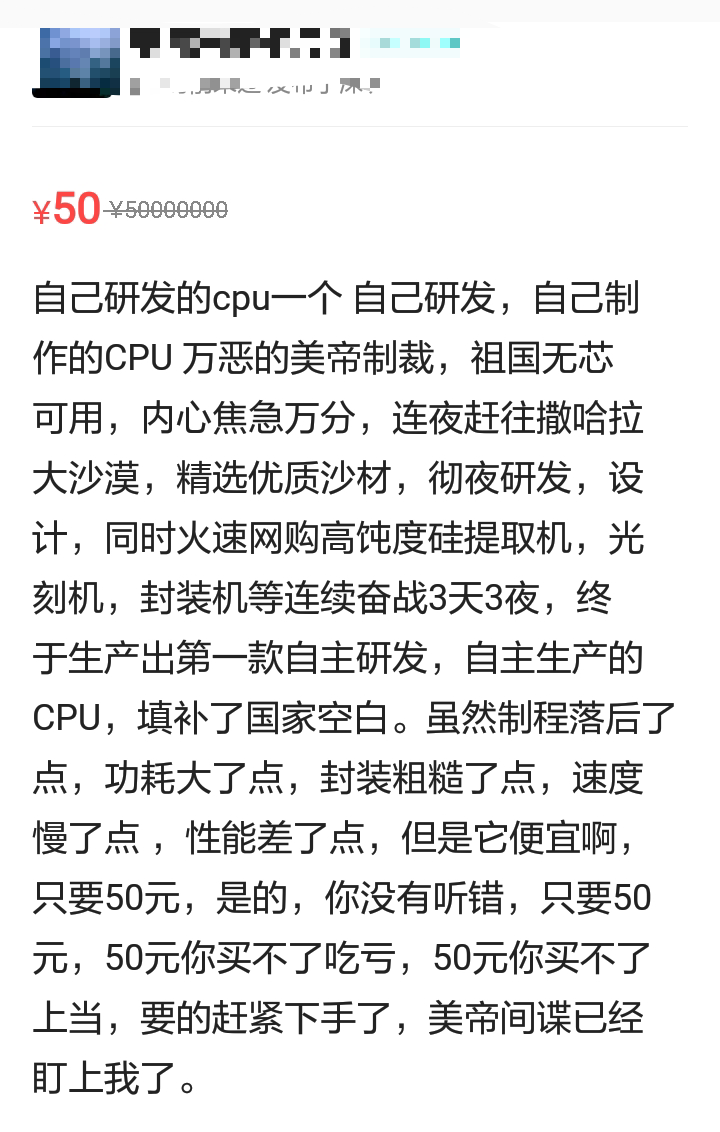
At a small e-commerce industry seminar, a speaker pointed to the picture in the PPT presentation and asked with a smile. The picture shows a so-called self-developed "computer CPU" sold by a seller on a second-hand trading platform. It claims to fill several gaps, and the price is only 50 yuan each. "It's so weird. Is it because the seller thought it was fun?" an audience member responded at the scene.
"Actually, it may not be as simple as a prank." The speaker continued to demonstrate. It can be seen that under this "ridiculous" product details introduction page, there are more than 200 user messages. Some praised the seller for being talented, and some ridiculed him for bragging and not drafting. The seller also responded and interacted with users' messages one by one.
The speaker pointed out that perhaps this "weird" seller selling a so-called self-developed CPU is just to gain attention and sensationalize; perhaps, there is a business behind it, but the main line of the business is not on these second-hand trading platforms.
"If you look carefully, you will find that there seem to be more and more weird sellers like this, and they are always recommended on the home page." Indeed, in addition to "self-developed CPUs", there are also a large number of shocking products on this second-hand trading platform.
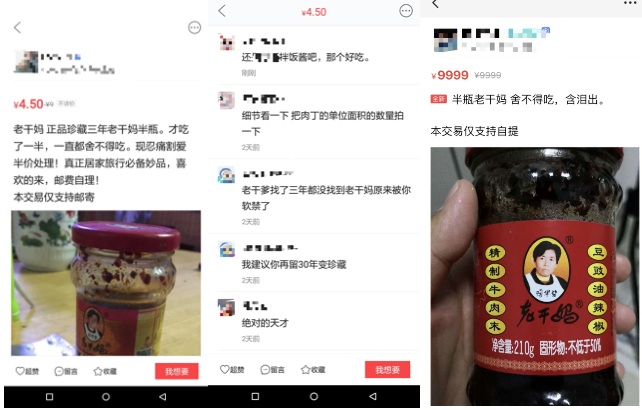
For example, half a bottle of Lao Ganma, Pikachu’s Poké Ball, the gourd baby who saved grandpa, a Boeing 737 that had been idle for half a year, a newly hatched Velociraptor baby...these "weird" sellers interpret the "weird stories" on the platform.Is it really just to sensationalize and make you laugh?
"No, this is a new traffic business."
Selling "weird" goods online, "sellers" want traffic
"What I care about is whether such a topic can touch the sensitive nerves of users."
After contacting many parties, we met Li Wei and his team members. Following the success of the topic of selling "half a bottle of Shanxi mature vinegar", Li Wei began to think about a new plan. He told Understand Notes that selling all kinds of weird and weird products on e-commerce and social platforms is a newly emerging online marketing knowledge, and he considers himself to be a leader in it.
As a planning company established just over a year ago, he and his team have won the favor of many advertisers with their eye-catching marketing model. And a marketing topic they launched not long ago was to "sell" a so-called old aircraft carrier from the former Soviet era on a second-hand e-commerce platform.
"Buying an aircraft carrier will not be afraid of the American emperor and bring glory to the country. This should be a good gimmick." Li Wei said quite proudly, because most similar topics in the context of the sweater war can arouse the passion of netizens.
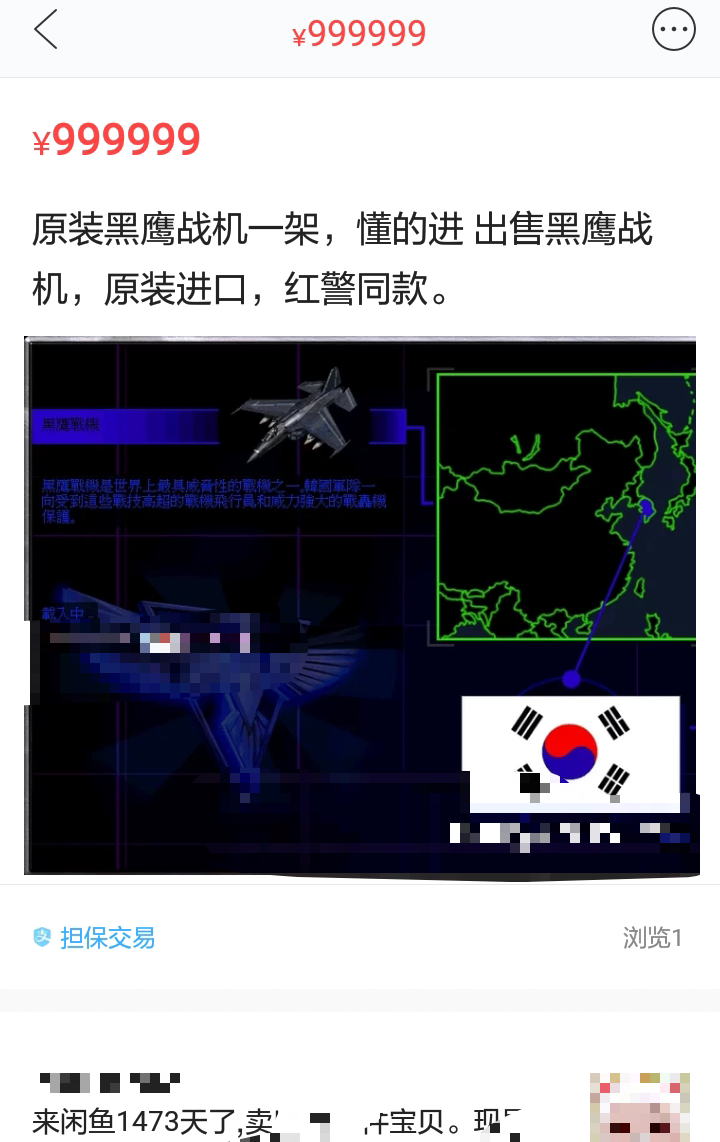
He showed the "new fighter jets" that his peers were selling on some social platforms to Notes. Under the details page, there are actually six to seven hundred messages for interaction. Some buyers even pretended to take it seriously and asked about the specific year of manufacture and mechanical configuration of the "new fighter jet."
“Their topic goal this time is to have over a thousand message interactions and spark widespread heated discussion.” Li Wei said that naturally no user would place an order for these second-hand “aircraft carriers”, “fighters”, and “tanks” priced at tens of millions; “independent CPUs” and “weather control chips” worth tens of yuan; and half-bottles of Laoganma, mature vinegar, and yogurt that cost a few yuan.
However, with hundreds of messages and heated discussions on the Internet, the people who eat melons cooperated with the sellers to put on a "good show". In his opinion, watching "weird" sellers selling "weird" products seems to have become a subcultural phenomenon on some second-hand e-commerce and social platforms.
“It must be an imaginative product with exaggerated pictures., exaggerated description, buyers will view the product as a story. "Under Li Wei's arrangement, his team began to design some bizarre product pictures and write nonsense introduction copy.
He and his team often look for some hot social topics and hype them up where netizens are most nervous. “Some people liked it, and many people criticized it, which we expected. "In Li Wei's view, as long as the hype marketing topic can arouse widespread attention on the Internet and cause more interactions, it can be regarded as a success regardless of its reputation.
For this kind of marketing team, the most terrifying thing is that after the "weird" product is released, the topic is tepid and fails to reach the expected popularity. To put it bluntly, topic hype is a bit like incubating traffic stars. You can either become a top Internet celebrity or cultivate a funny "Internet Ugly". The key point is traffic.
Therefore, with the promotion of these organizations, some topics that cost little or no cost may be pushed to recommendation pages with high traffic and high exposure on the platform. Only in that way will the sponsors behind them see their marketing capabilities and their ability to continuously share and split some ordinary "topics" to continue to expand their influence.
Only in this way, some customers who need marketing planning and promotion will be impressed by their abilities.
Put "weird" on the recommendation list and let fission drive the spread
“The price is a bit expensive, but the seller is really awesome. ”
Li Siyu is responsible for copywriting work in Li Wei's company. Every day, she enters lines of seemingly nonsensical "comments" into the document, and then hands it over to a third-party fraud agency, pretending to be a netizen leaving a message behind the "weird" products released by the team.
She told Understand Notes that in addition to the recommended product copywriting being full of humor, netizens’ comments were also all serious nonsense. Every time she hypes up a new topic, she writes hundreds of similar comments to serve as "firewood" to heighten the atmosphere.
“It is not difficult to get on the recommendation page by grasping the rules of the platform. "When the third-party fraud agency adds interactive messages and purchase inquiries to these hundreds of reviews, the search rankings of the products will begin to rise. At this time, some users who have set relevant interest tags will be able to see product recommendations.
If the title picture of the product is attractive enough, the details are funny enough, and the message content is rich enough, then real users will share and interact with it. This is the first round of fission of the topic. When the popularity of the topic increases and the number of original comments increases, it can be forwarded through multiple channels.
“As long as the user’s interest points are accurately identified, the speed at which these topics will spread will be quite astonishing. "Li Siyu told Understand Notes, taking the topic of "Selling Poké Balls" as an example. The finishing sentence in their product details introduction, "Pikachu was captured by Team Rocket, and sold Poké Balls to raise travel expenses to go on adventures," made many netizens laugh.
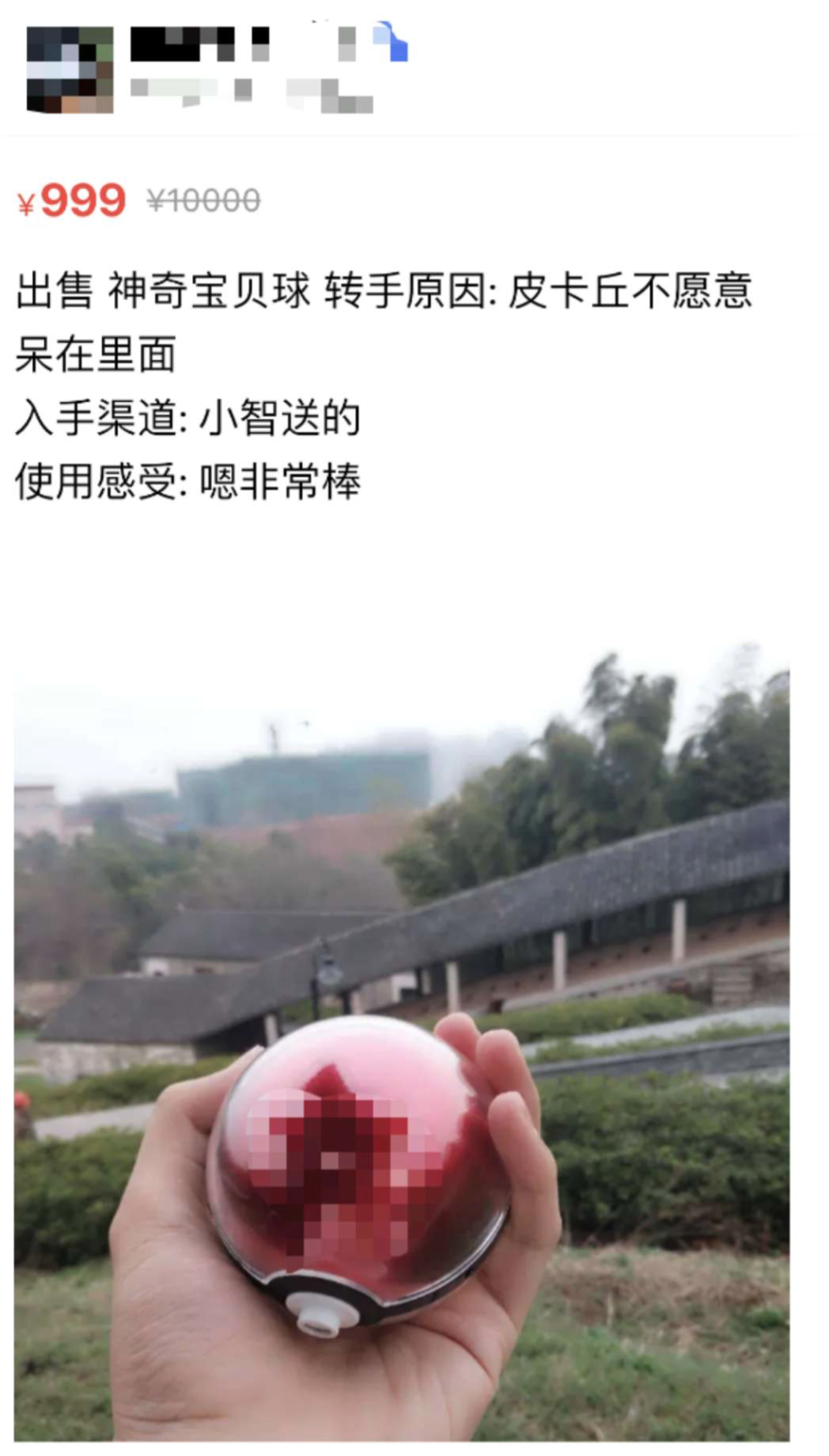
Including the nickname of the seller who "peddled" the Poké Ball, named "Xiao Zhi", also to evoke the memories of many netizens born in the 85s and 90s. Therefore, the second-hand product page of "Poké Ball" was commented and forwarded by a large number of users.
"In about one day, there were more than 300 original messages from buyers on the trading platform, with tens of thousands of views." The shared links she forwarded on other social platforms also had a high click-through rate. In an online world where traffic is king, any likes, comments, and interactions from real users are very precious and can even become capital for their team to win customers in the future.
Li Wei's seemingly nonsensical marketing plans have also brought them considerable business opportunities.
According to him, in the one year since its establishment, the company has planned nearly twenty rounds of similar topics, and almost every round has received hundreds of thousands of page views on some second-hand e-commerce platforms and social platforms. Among them, the popularity of the strange topic "half bottle of 1998 Coke" directly led to two major marketing orders.
As a business planning agency, besides selling gimmicks and entertaining the public, how does it monetize its traffic and influence? Which companies would be interested in this kind of "half-bottle of Coke" and "half-bottle of Laoganma" that can never be sold?
How can hot topics be embedded into products to monetize traffic?
"This is a success story of our team. Leaders here please take a look at the data."
In the conference room of a smart door lock manufacturer, Li Wei is introducing the successful marketing cases of his team to the marketing department and the person in charge. He hopes to win promotion and cooperation orders from this type of smart hardware company. Recently, they have visited many related companies in Guangdong and Fujian. “Many customers are very satisfied with the traffic data we displayed.”
Almost all of these data come from the hype of exotic products. What he wants to express to his customers is that since the team can create such hot topics, it can also use its excellent planning capabilities to help companies plan marketing plans and promote products in the 2C market.
"It's just a gimmick anyway. I'm not sure whether the plan can impress these customers." Although he is modest, with these gorgeous data and successful cases, Li Wei has indeed negotiated a lot of marketing cooperation in the past six months.
Those nonsensical second-hand products are actually one of the marketing planning vehicles created by their team for some customers. On the detail pages of some hotly discussed products, comments are often "inadvertently" interspersed with product content of the customer's brand. This is "soft promotion."
"If the products being promoted are similar to the topic product category, the effect will be even better." He told Notes Understand, taking the "Half Bottle of Shanxi Old Vinegar for Sale" topic planned in the past few months as an example. When the number of comments reaches a certain number, the team will arrange its own account to go to the message area to insert "ads", and the content will be a local brand of soy sauce products, and then add these own comments.
In the next few days, user comments will gradually be guided by interspersed "soft propaganda", from discussing Shanxi mature vinegar to discussing the praise and criticism of this soy sauce. The purchase links posted by some "enthusiastic netizens" in the comments have become the entrance to product conversion and sales.
“The product transaction data is not bad, the key is that the brand’s popularity has been spread.” Therefore, similar online marketing models are quite popular among some local small and medium-sized brands. For each hype topic, several related categories of brand products can be embedded, such as oyster sauce, fish sauce, chicken essence condiments, etc.
Based on the cost of 10,000 yuan for implanting a product, the topical influence of a successful “weird” product on a second-hand platform can often bring tens of thousands of yuan in advertising revenue to an organization. It’s no wonder that there are so many “sellers” who put idle “aircraft carriers”, “tanks” and “fighters” on the platform for sale.
However, don’t second-hand trading platforms and social platforms ignore the release of such nonsensical and bizarre products? Li Wei explained that as long as the product name does not violate any rules or laws, it can generally be released smoothly.
And so far, they have not had any "topic products" removed from the shelves after being reported by buyers.
By publishing "weird" idle products on e-commerce platforms and social platforms, it triggers heated discussions among users and generates natural traffic and interaction. Reuse data to attract small and medium-sized brands to place ads and make profits. For marketing planning agencies like Li Wei, this is just one of the ways to make money. The same launch, in a different form, can also be achieved on some well-known search engines, Tieba, and short video platforms. The difference is that instead of selling a weird product, it is about selling some weird topics, fake news, and "ugly" short videos.
To netizens who don’t know the truth, these tricks seem like they are just participating in a ridiculous online farce. However, the more people watching, the more data results can be created for planning and marketing agencies, which can then be monetized and realize profits.
Whether it is the topic marketing in the past or the "weird" second-hand idleness today, it actually reflects the desire of institutions and merchants for online traffic. At a time when online traffic is becoming more and more expensive, finding ways to encircle traffic is the desire and pain point of many funders. From a business perspective, "Li Wei" people are also relying on their brains to make ends meet. And they never care about what is inside or outside the Fifth Ring Road. If the masses can be attracted by their planning in the online world, it is success.
[Source: TMTpost Media Author: understand notes]
Previous:In the second half of the Inte
-
 Exploring the Fascinating Worl2026-07-03 11:13:32Discover the intricate world of Elvarri noun forms and their...
 -
Tragic Motorcycle Accident Cla2026-07-03 11:13:32A motorcycle accident in Verona has tragically claimed a lif...
-
Fashion Sustainability: Trends2026-07-07 10:37:47Discover the trends driving sustainability in the fashion in...
-
Explore Melbourne in Comfort w2026-07-03 11:13:32Discover the convenience of Maxi Taxi services in Melbourne....
-
Taylor Swift Faces Heartbreaki2026-07-05 17:17:37On the day of her wedding to Travis Kelce, Taylor Swift mour...
-
England Triumphs Over Panama,2026-07-03 11:13:32Discover how England topped Group L in the World Cup, with s...